
What Parents and Nannies Need to Know About Bottle Refusal, According to an IBCLC
- By Stephanie Fornaro
- January 27, 2026
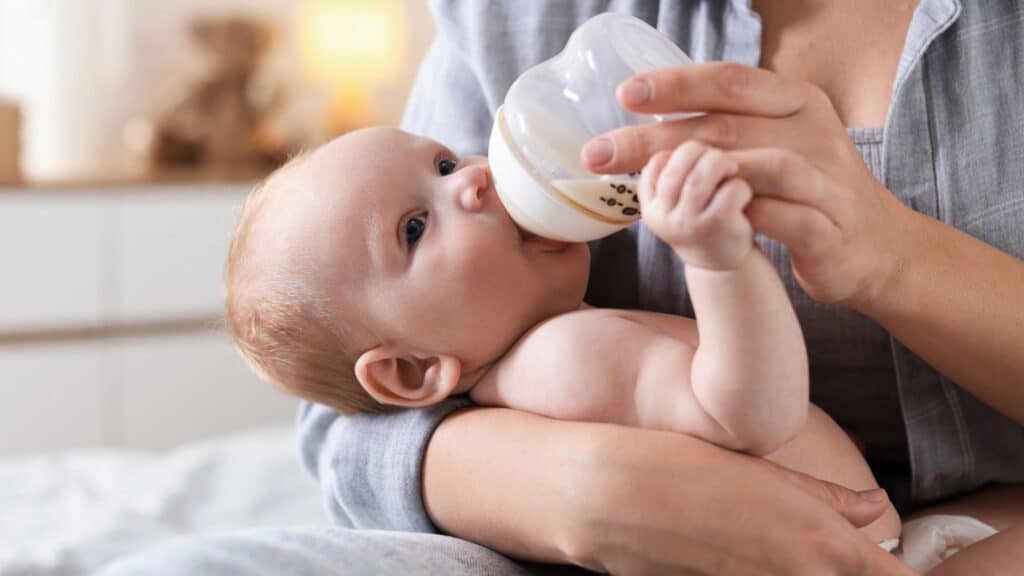
Bottle refusal is common, but solvable. Discover expert-backed strategies to help your baby build bottle feeding skills, prevent aversion, and make feeding a calmer, confident experience for both parents and caregivers.
You’ve warmed the formula or breastmilk just how they like it, meticulously cleaned their favorite bottle and positioned your baby to feed only to see them suddenly turn their head, clamp their lips shut, or melt down the moment a bottle appears.
For a new parent, there are few moments more stressful than when your baby refuses to eat. Bottle refusal (which sometimes evolves into bottle aversion) is far more common than most parents expect—and it can feel especially overwhelming when it shows up right as you’re preparing to return to work or spend time away from your baby.
Many parents quietly spiral through late-night Google searches, order bottle after bottle, and worry nonstop about whether their baby will be okay without them. The good news? Bottle refusal is solvable, often within a few weeks, and it’s something you can work through as a team with your nanny or caregiver.
To help make sense of it all, we spoke with Susan Howard, MSN, RN, IBCLC, a lactation consultant who specializes in bottle refusal, and she shared practical, reassuring guidance every parent should hear in the process too.
What Is Bottle Refusal?
Bottle refusal happens when your baby is struggling to take the bottle consistently. Typically, you may start to see bottle difficulties at around 6-8 weeks, and then if not addressed, it can grow over time. Bottle refusal can start out with a hesitancy towards the bottle but has the potential to evolve into a full on bottle aversion by 20 weeks.
That’s why it’s important to remember when a baby is refusing the bottle, you can’t make them take it. For a breastfed baby, a bottle is a completely different nipple. Some babies can easily go back and forth, while others have a harder time learning the skill, especially when they’re older and first learning how to bottle feed.
And while some instances may invite a ‘wait and see’ approach (hey, maybe one day soon they’ll like pureed sweet potatoes), bottle refusal won’t go away with time. Bottle refusal is a feeding issue that can and should be resolved with the right approach soon after you notice your baby refusing the bottle.
Bottle Feeding Is a Skill
A lot of parents assume their baby will take the bottle easily. While this is true for some babies, for many, it’s far from the truth. So, if a baby is having a hard time with the bottle, we want to figure out why they are struggling and help find a solution.
Susan explains, “I wish families who intended to utilize bottles as part of their feeding plan would also know that feeding from a bottle is a skill, not an activity that we check off. It’s much more than that.”
Just like learning to roll over or crawl, bottle feeding requires practice, patience, and the right support. When parents understand this, they can approach bottle feeding with realistic expectations and a plan to build those skills early.
Building Bottle Skills vs. Pressure Feeding
When babies refuse the bottle, desperate parents often resort to tricks to get their baby to eat. You might have tried jiggling the bottle in your baby’s mouth, swaddling them tightly and bouncing while feeding, or sneaking the bottle in while they’re sleepy.
Susan calls this “pressure feeding” and is not a long-term solution to helping your baby take a bottle effectively..
“Pressure feeding is anything we’re doing that makes a baby eat when they do not want to,” she says.
Unfortunately, these well-meaning tactics can lead to more feeding difficulties, even a feeding aversion. Instead of helping your baby learn to take the bottle, pressure feeding can make bottle refusal worse by creating negative associations with feeding.
The more effective approach is slower and gentler: building bottle skills over time. That means offering the bottle without pressure, watching your baby’s cues, and allowing them to develop confidence at their own pace. By building both your baby’s (and your own!) bottle feeding confidence skills gradually, they will feel safe, capable, and in control during feeds.
Bottle Refusal Is Preventable
Here’s the good news: you can prevent bottle refusal (or bottle aversion) before it starts.
If you know you’ll be returning to work or using a bottle in any capacity, incorporate a “skills bottle” into your routine early. It can be as simple as offering a 1oz bottle during the day or every other day, even if you’re primarily breastfeeding.
This low stakes practice helps your baby build familiarity and competence with bottle feeding before it becomes a necessity. And when the time comes for your nanny or another caregiver to take over feedings, the transition will be much smoother.
Also, it’s important to include your nanny from the start. The more your nanny understands your baby’s feeding plan and skills-building approach, the better they can support your goals when you’re not there.
Have the Right Tools in Your Toolbox
Creating a plan and having the right support is an important first step in addressing or preventing bottle refusal.
Here’s what Susan recommends:
- Work with an IBCLC. Put a plan together with a lactation consultant, ideally before bottle refusal becomes a crisis. You can even start this conversation during pregnancy if you know bottles will be part of your feeding plan.
- Include your nanny in IBCLC sessions. Your nanny is on the front lines of feeding when you’re away. Make sure they don’t miss out on important information by inviting them to appointments or sharing key takeaways from your consultations.
- Don’t hyperfixate on one type of bottle. There are so many bottles on the market, each with different types of marketing claims. It’s easy to get overwhelmed or convinced that one “miracle bottle” will solve everything. Instead, Susan says to focus on the shape of the bottle nipple rather than a brand. “Stick with bottle nipples that are gently sloped with a wide base versus short stubby nipples,” she advises.
Bottle Feed with Confidence
Bottle refusal can feel isolating and overwhelming, but you don’t have to navigate it alone. With the right information, support, and skilled caregivers by your side, you can help your baby build the skills they need to feed confidently from a bottle.
Remember: bottle feeding is a skill, not a test.
Be patient with your baby, avoid pressure feeding, and reach out for professional support when you need it. With time and the right approach, most babies can overcome bottle refusal within a few weeks.
Bottle Refusal FAQs
1. Is there a difference between bottle refusal and bottle aversion?
Yes, there is a difference. Bottle refusal typically happens with primarily breastfed babies who may have previously taken a bottle well but now struggle with it. They might play with the nipple, chew on it, or seem unsure what to do, but they’re generally not upset. Bottle aversion usually occurs with fully bottle-fed babies who start volume limiting (only eating 1-2 ounces), may cry at the sight of a bottle, and often have a behavioral root cause tied to pressure feeding.
2. How long does bottle refusal/bottle aversion last?
Bottle refusal and aversion exist on a continuum, and without intervention, refusal can progress into aversion over time. It can progress into a full feeding aversion that affects infant feeding, introduction to solids, and feeding into toddlerhood. This is why it’s so important to seek professional help early rather than waiting for it to resolve on its own.
3. How do I fix bottle aversion?
Reach out to an IBCLC, pediatrician, or feeding therapist to identify the root cause. The cause can be tied to pressure feeding or other underlying issues like reflux, milk protein sensitivity, or oral dysfunction. The key is to stop pressure feeding tactics and work with an expert to create a responsive feeding plan.
4. How do I keep my baby hydrated when they’re refusing the bottle?
If your baby is breastfeeding, continue offering the breast as an option. For bottle-fed babies, you can try sleep feeds, work on cup feeding skills, or teach straw drinking if the baby is closer to six months. Partner with your pediatrician to monitor hydration and weight, and seek professional feeding support to address the root cause.
5. Why is my baby refusing the bottle?
Bottle refusal can happen for many reasons: anatomical or behavioral issues, lack of consistent bottle practice, pressure feeding, unmanaged reflux, milk protein sensitivity, swallow disorders, tongue tie, etc. The most important step is to seek professional help early to identify the specific cause and create a plan tailored to your baby.
Please follow and like us:
You may also like…

- By Stephanie Fornaro

- By Blueberry Pediatrics

- By Stephanie Fornaro