
The Most Common Child Safety Issues Most Parents Aren’t Aware of
- By Stephanie Fornaro
- March 18, 2026
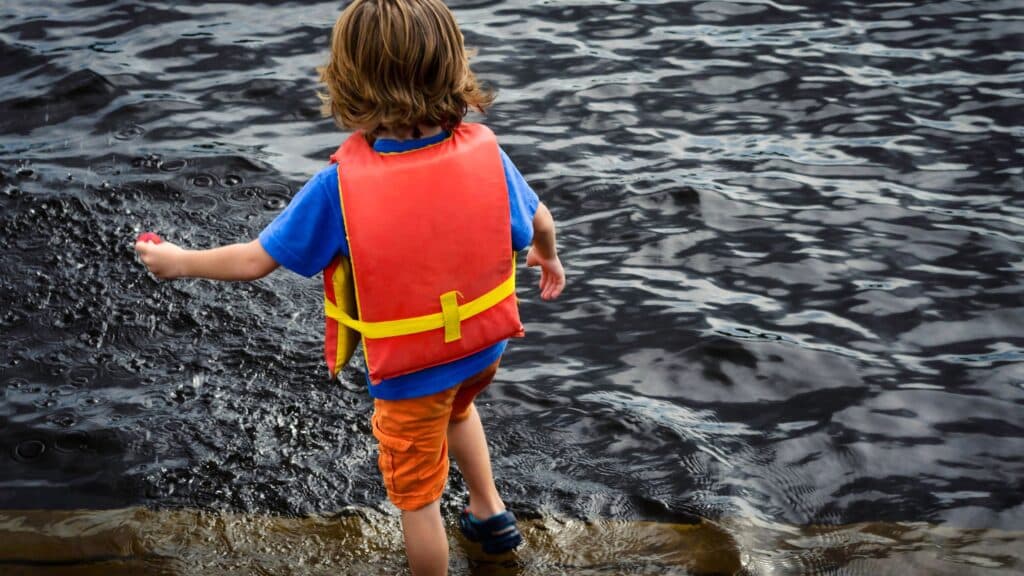
An emergency physician shares the 8 most common—and most preventable—child safety hazards families overlook, and how preparation can turn panic into confidence.
Once you become a parent, it’s information overload. From procuring the right size diapers to installing the car seat correctly to finding the lotion that keeps their eczema at bay, there’s no shortage of things to remember to keep your little one happy and safe.
But beyond the obvious checklist items are the everyday child safety gaps most families don’t always realize exist. These bubble up as small, seemingly harmless moments like assuming the car seat straps are tight enough, stepping away from the bathtub “for just a second,” trusting that child-resistant packaging is truly childproof. These common assumptions are just that: common occurrences that many parents gloss over in the chaos that is family life.
But it’s these little instances that, precisely because they’re so common, can make us more complacent—and that very frequency may actually pose the greatest risks to babies. Dr. Darria Long, Harvard- and Yale-trained emergency physician, mom of 3 and founder of No Panic Parenting, says that the majority of serious injuries she sees in the ER aren’t rare, freak accidents, but common, preventable situations.
She tells us, “So many of the accidents I see in the ER aren’t a result of the parents being ‘careless’ or not loving their children enough. In fact, the parents often end up saying, I knew better—we just did it this way every day and I got complacent. That’s why I specifically help parents ‘triage’ baby risks so you’re NOT having to be afraid of everything all the time: you’re vigilant about the real risks, and can keep your child safe, while having peace of mind.”
Dr. Darria is here to assure us that with the right knowledge and practical training, parents and caregivers can close those safety gaps before they ever turn into emergencies. Read on for the 8 child safety hazards all parents should be aware of.
👉Your child’s safety starts with the right caregiver. Complete our family intake form and we’ll help you find a nanny trained to support your household’s routines and safety standards.
8 Most Common & Preventable Child Safety Issues
1. Car Seat Installation and Resale Mistakes
Of course, you know you need a car seat. But what many parents don’t realize is that simply having one isn’t enough. Proper installation—and understanding the fine print—does actually matter.
Ask yourself:
- Is it installed correctly using either the LATCH system or the seat belt (not both, unless the manufacturer allows it)?
- Are the straps at the correct height and tightened so you can’t pinch excess webbing at the shoulder?
- Is the chest clip positioned at armpit level?
- Has the seat expired? (Yes, car seats have expiration dates.)
- Has it ever been in a minor crash—even a fender bender?
- Are you making sure your child is installed in the seat without a jacket?
Car seats can also become unsafe when resold or handed down. You may not know the seat’s full history, whether it’s been in an accident, or if parts are missing. Even small structural stress can compromise the integrity of the seat in a future collision. “This is such an important point”, notes Dr. Darria, “You can buy the most expensive or fanciest car seat in the world, but if you’re making some of the most common errors that we see with every seat (straps too loose, not tightening the seat sufficiently into your car, transitioning to the next seat to quickly, an expired seat that has tiny fracture points) then your child isn’t safe. On the flip side, I have seen such amazing life-saving moments from car seats: accidents where the car is just destroyed, but a well-installed and properly used car seat protected that precious little child like a bubble!”
The safest approach:
- Always register your car seat so you receive recall notices.
- Never use a seat that’s expired or has been in a crash.
- Schedule a free inspection with a certified Child Passenger Safety Technician to ensure correct installation.
- This one may seem obvious, but it bears repeating: Use the car seat correctly every single time. Make sure the seat is tight into the car and strap your baby equally tight.
When caregivers or nannies drive your child, they should also be trained in proper car seat installation and adjustment. Because in a crash, a correctly installed car seat can save a life. “This is another point I always emphasize to parents: it’s crucial that it’s not just YOU who knows how to properly use the seat. Please make sure that ANYONE who may be driving your child—even a short distance—is using the exact same degree of vigilance.” says Dr. Darria.
Related: 10 Essential Things to Do Before Baby Arrives
2. CPR Training
Just because you took a course in the hospital, doesn’t mean you or your caregiver are fully equipped to manage CPR in an emergency. This is a table stakes skill to know and one that you or anyone who is around your children should brush up frequently. Because in those first critical moments, you are the first responder.
Here’s what every parent, grandparent, nanny, and babysitter caring for your child should know how to do:
- Perform age-appropriate CPR
- Respond quickly and correctly to choking
- Recognize the early signs of respiratory distress
“Having to perform CPR is one of those things that we never want to even think about—I absolutely get that. But I’ve seen moments where a parent knowing what to do literally saved their child’s life, so I will sing this from the rooftops. Every parent, caregiver, grandparent or loved one can and should be trained in CPR, Choking, and Drowning First Aid. These are the moments that you do NOT have time to wait for the ambulance. It can take 3-5 minutes for permanent, life-threatening damage, and an ambulance will on average take 9-12 minutes or more. This is a moment when you absolutely can save your child’s life”, states Dr. Darria. “That’s exactly why I built the CPR, Choking & Drowning course—because this is a skill every parent and caregiver can learn, and once you have it, it genuinely changes how you show up for your child.”
Dr. Darria’s No Panic Parenting: CPR, Choking & Drowning course was designed specifically for real-life family scenarios. Her training equips caregivers with practical, step-by-step skills so they can act calmly and confidently when seconds count. You’ll walk away with practical knowledge, as well as BLS certification and 2 hours AMA Category 1 CME credit. Plus, included with the course are periodic (short!) refreshers to your email, to help you keep your skills (and muscle memory) ready. Learn more about No Panic Parenting and receive a 10% off the course with code HELLONANNY.
3. Bathtubs and Daily Water Risks
Your child, who can now sit up and play independently, is happily splashing around in the bathtub. Your older child calls to you from the other room asking for help. You go to them knowing your younger child is entertaining themself with a new bath toy and that you’ll be back in 60 seconds.
This scenario is incredibly common but also incredibly dangerous.
Drowning is silent and quick and rarely looks like splashing or yelling the way movies portray it. In fact, “drowning is the #3 cause of accidental death in children under one year old, and the top location? The bath tub.” says Dr. Darria. In small children, it can happen in seconds—and in just a few inches of water.
“I took care of a little girl—who fortunately ended up ok—but her mom had done exactly this. The little girl was taking a bath when the mom’s cell rang. Her mom ran to grab her phone, but the caller was her sister, with worrisome news about their dad’s health. The mom took maybe a minute —nothing more—and when she went into the bathroom, her baby was face down in the water. Not moving. Not breathing. She dropped the phone and started screaming for her sister (still on the call) to call 911. She grabbed her little girl and started giving her breaths. Her daughter aroused and was alert by the time EMS arrived, but of course they brought her in for a check. The mom kept telling me ‘I knew better. I know better. I lock my toilet lids, and yet I left my daughter in the tub’. Her daughter was ok, but that poor mama was so wracked with guilt. I have a few rules that I teach in my course so that parents can prevent this and the first is to NEVER ever leave the child in the tub or anywhere out of arms reach. If you have to answer the phone? The door? Hear an older sibling suddenly scream? Grab the baby— soaking and all—and take them with you. A little wet floor is absolutely worth a safe baby”, advises Dr. Darria
The safest standard is simple but strict: if a child is in or around water, an adult should be within arm’s reach—fully attentive and undistracted. Yes, that means no phones, no multitasking, and no assuming you’ll “just be away for a second.”
Related: What Parents and Nannies Need to Know About Bottle Refusal, According to an IBCLC
4. Babyproofing
Outlet covers, cabinet locks and stair gates are the most obvious babyproofing spots. But many injuries happen because of the less obvious risks: unsecured furniture, dangling blind cords, accessible medications, tip-prone TVs, button batteries, or everyday household items left within climbing reach.
Babyproofing isn’t a one-time checklist because as soon as your child learns to roll, crawl, pull up, or climb, their world expands—and so do the risks.
According to Dr. Darria, “I actually like to help parents ‘triage’. to know what risks to worry about per your child’s age and developmental status. Because trying to follow some massive checklist of 100 items for ALL the risks doesn’t actually help you—it’s just overwhelming. Instead, we focus on what is the most important risk, by your child’s age. So, there are things we have to do before they’re born, and then those items that I tell parents to do before they’re crawling. Because that will happen quickly, and while a baby who just crawls may *seem* like they can’t get into too much trouble, they will surprise you! This is the stage that we really focus on having baby safe areas (nothing like a newly crawling toddler to find that extra tablet of a pain and fever medication that a guest dropped under your couch over the holidays), as well as other ways to keep your curious and newly mobile infant safe without making you lose your sanity!”
Dr. Darria Long Gillespie’s No Panic Parenting: Babyproofing & Child Safety course walks families through room-by-room safety planning, age-specific risks to be aware of and what products actually work (and what not to waste your money on). It goes beyond surface-level advice to explain why certain risks matter and how to adjust your home as your child grows. In addition to the practical knowledge, you’ll also receive 4 hours AMA Category 1 CME credit. Learn more about No Panic Parenting and receive a 10% off the course with code HELLONANNY.
Effective babyproofing isn’t about bubble-wrapping your home (or your babe) but about anticipating the next milestone and providing practical child safety babyproofing tactics that fit your family’s needs.
5. Pet Safety
Pets are beloved members of many families, but familiarity and comfort can sometimes lead to a false sense of security. According to the University of Rochester, dog bites are the leading cause of pediatric visits with more than 2 million children bitten by dogs every year.
Dr. Darria tells us: “Every year, I take care of littles who were bitten by a household dog and it’s by a nice, sweet dog. Not because the parents were wrong and it’s a mean one. It’s because toddlers are both curious and vicious and they’ll jab a dog in the eye, grab their ear, tug their tail. And when the dog is poked in the eye, it reflexively responds with a snap (TBH, if you poke me in the eye, I’d do the same). And of course, it happens in a milli-second and the moment the dog realizes that it bit the child it lets go. It had no intention of hurting the child, but, the sheer speed, and relative size of the dog’s mouth compared to the infant’s face, means that even these unintended wounds, can cause serious injuries to the child.”
Young children can be especially vulnerable because they move unpredictably, get close to a dog’s face, and don’t yet understand warning signs like stiff posture, growling, or backing away. Even the gentlest, most well-trained dog can react if startled, hurt, or overwhelmed.
Pet safety means:
- Never leave babies or toddlers alone with a dog—even for a moment.
- Teach children to avoid hugging, climbing on, or approaching a dog, especially while it’s eating or sleeping.
- Create safe retreat spaces where pets can rest undisturbed.
- For dogs who are unfamiliar, always tell your children that they must ask to pet the animal before reaching out.
Clear boundaries protect both your child and your animal, and help ensure their relationship grows safely and harmoniously over time. (And yes, if you’re curious, we have an entire video in the Baby Proofing Course on this as well, to help parents introduce their baby and “fur baby” safely).
👉Looking for a caregiver who understands child safety best practices? Complete your family intake form and we’ll help you find the right match.
6. Sleep Safety Shortcuts
For parents running on fumes, there is nothing more tempting than whatever helps everyone get a good night’s sleep. Sure, bring them into the bed—it’s just one night. They seem to like that blanket that keeps them cozy. Let’s try that inclined sleeper that promises longer stretches. In the haze of exhaustion, small “shortcuts” can feel harmless—or even necessary—in the moment.
But safe sleep guidelines exist for a reason. Soft bedding, loose blankets, pillows, inclined sleepers, and unsupervised sleep outside of a crib or bassinet all increase the risk of suffocation and sleep-related infant deaths. What feels more comfortable or convenient in the moment may introduce risks that aren’t immediately visible.
As Dr. Darria explains, “I absolutely understand that there are nights that you are so tired you’ll take any shortcut to get your baby to sleep. This does not make you a bad parent—it truly makes you human. That’s why I always first emphasize the reason behind the ABCs to sleep: because in the first year of life, suffocation during sleep is the #1 cause of accidental death. The very top. It’s that serious. So, the very best way to keep baby safe is to follow the ABCs of sleep, which are listed below, with baby sleeping in your room, but in a separate sleep surface. Yes, you will hear about other methods that suggest ‘safer ways’ to bed-share, and you can look at those. I always want to let parents know that I will discuss these and there is no judgment, but I always urge parents to note that while following those steps may make bed-sharing *less risky*, it will not lower the risk to the level that your baby will be, if you do not bed-share at all.”
The safest sleep setup is also the simplest:
- Baby placed on their back
- On a firm, flat surface
- In an empty crib or bassinet (no bumpers, blankets, or stuffed animals)
For children over a year old, Dr. Darria suggests to, “still follow safe sleep practices, and at the same time, it’s so reassuring to know that your baby’s risk during sleep is significantly decreased”. Consistency when it comes to sleep safety matters, especially when multiple caregivers are involved. Parents, grandparents, and nannies should all follow the same safe sleep standards (if anyone needs a refresher, here are the AAP’s guidelines).
Related: Sleep Regressions Explained: How Parents and Nannies Can Support Baby Together
7. Medication and Cleaning Supplies
Most parents know to keep medications “out of reach.” But what many don’t realize is that child-resistant does not mean childproof.
Many accidental ingestions happen during everyday moments like when a bottle is left on the counter after use, when a grandparent’s pill organizer sits within reach, or when cleaning supplies are stored under the sink without a lock.
“I call it the Just Principle. The parents (who are normally very vigilant), bring in their child, and tell me, ‘I *always* put away the pill bottle. I left it out just for a minute while I took the pill….’ or ‘I left the lid off just this once because I was distracted’. Toddlers are curious. They’re like little surveillance spies watching for that moment you slip up. I’m joking of course, but it’s not entirely untrue. They have an uncanny ability to find the one exception when you’re typically vigilant. That includes medications. So, to avoid constant paranoia whenever anyone in the household needs medication, I teach a few rules, including multi-layered protection”.
The safest approach is layered:
- Store medications and cleaning supplies locked and out of sight.
- Keep products in their original containers.
- Save Poison Control (1-800-222-1222 in the U.S.) in your phone. They’re available 24/7.
- Ensure all caregivers know where medications are stored—and which are strictly off-limits.
Related: Baby Milestones: What to Expect in the First Year
8. Checking Fire Extinguishers, Emergency Exits & Carbon Monoxide Detectors
Did you know that fire extinguishers expire, smoke and carbon monoxide detectors need working batteries and emergency exits can become blocked by furniture or storage? Think about, practice and communicate to anyone who will be in your home, what exactly to do in an emergency, including your exact evacuation plan.
“Smoke and carbon monoxide detectors are a great ‘no-panic parenting’ tool because they allow you to put a safety mechanism into place, and then not worry about it. Sort of set it and forget it. These are those items that you hope you never have to use, but if you do need them, you need them to (a) be entirely functional and (b) to be able to find them in the middle of an emergency (likely without any power)” Notes Dr. Darria.
Every home should have:
- Working smoke and carbon monoxide detectors on every level
- At least one accessible, unexpired fire extinguisher. Put a calendar reminder for the month and year it’s set to expire so you remember to buy a new one.
- A clear evacuation plan reviewed with all caregivers
- Emergency contact numbers posted and saved
Safety Means Being Prepared & Consistent
Whether you have a summer nanny, a grandparent helping out twice a week, or a full-time caregiver, all should be aligned on your family’s unique safety protocols and standards.
Because it’s easy to assume that experience equals preparedness or to gloss over the details. But loving children and knowing how to respond in an emergency are two different skill sets. The safest homes are the ones where every adult knows exactly what to do if something goes wrong. This means that it’s ok to revisit safe sleep practices with your nanny (especially as your child reaches new milestones like rolling over or transitioning into a big kid bed), remind grandma where your fire extinguisher is located and let your au pair know that you’ve decided to separate the dog from the kids during Fido’s dinnertime.
And just as importantly, parents should be trained and aware of the latest child safety hazards, too. Moving forward as a team in the most consistent and educated way possible will help ensure your child is safe and can thrive, no matter what trusted caregivers is on duty.
👉Safety isn’t something families should navigate alone. Tell us about your needs through our family intake form and we’ll guide you through a thoughtful hiring process.
FAQs:
What is the most common cause of injury in toddlers?
The most common cause of fatality is drowning and data shows that for toddlers, this is most commonly in open water, such as a pool or lake (vs for infants, that’s in the bathtub).
Are used car seats safe?
It depends how you define “used”. If by used, you mean the older sibling used it, it’s under 10 years old, has not met the expiration date on the seat, and has not been in an accident, then yes that’s ok. But if it doesn’t meet those criteria, then a car seat is not the place to try to “save” money by buying it used. Especially since all car seats sold in the US have to meet very stringent criteria, I’d much rather you buy a new, less expensive (but still meeting regulations) car seat, than risk it with a used car seat, that you can’t be sure meet my “safety” criteria above.
Is dry drowning real?
“Dry drowning” and “secondary drowning” are not medically recognized diagnoses. The terms spread through social media after misreported tragic cases, creating panic without scientific basis. If your child briefly goes underwater and immediately has symptoms that don’t improve in 30 seconds or less, have them checked. But here’s what’s missing from the “Dry Drowning” fear-bating: while a very small percent of children may be initially asymptomatic and develop symptoms over time, studies show that children who develop serious symptoms do so within 6–8 hours. So, watch for significant/worsening cough, blue or grey lips or discoloration around the mouth, vomiting, change in their mental state, or any other signs of breathing difficulty. If your child develops those, then of course, bring them in to be seen.
Should babysitters be CPR certified?
100%! If you’re a caregiver, then being CPR certified allows you to truly be the best ally for that child, and if you’re a parent, you should always ask and specifically hire a babysitter or caregiver who is certified and trained for CPR, choking, and drowning. That’s because emergencies happen in seconds and never “conveniently’ when the parent is there. They could happen with anyone. Having all caregivers be CPR certified is the very best way to build that little safety bubble around your child.
Please follow and like us:
You may also like…

- By support

- By Stephanie Fornaro
- By Stephanie Fornaro